- Why the Right Material Is Important for Packaging Forming
- Main Types of Materials for Food Packaging Forming
- How Material Properties Affect the Thermoforming Process
- Environmental Aspects of Material Selection
- Practical Tips for Material Selection
- Examples of Material Use in Food Packaging
- Conclusion: How to Choose the Best Material for Your Business

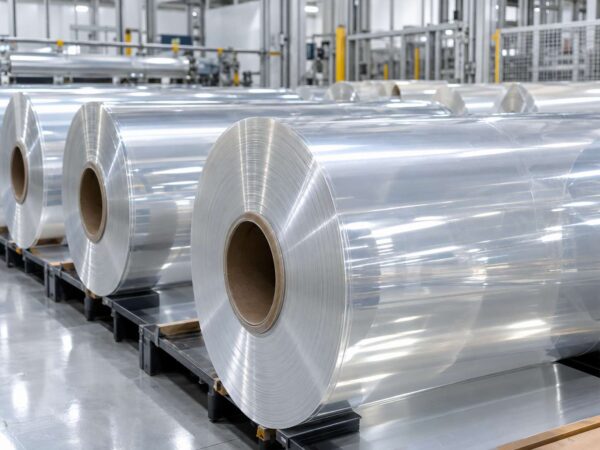
Modern packaging is not just about protecting products. It is a marketing tool, a way to preserve freshness and appearance, and a factor of economic efficiency and environmental responsibility. In the production of plastic containers, cups, lids, and trays, choosing the right packaging material plays a key role. It determines how well the thermoforming process works and how the final product performs in use.
Why the Right Material Is Important for Packaging Forming
The right choice directly affects the impact of material on packaging — its appearance, transparency, strength, and shape stability. Poor-quality or unsuitable film can lead to deformation, loss of tightness, and even product loss.
The importance of packaging material lies in the fact that it determines:
- Formability — the ability to take the required shape without tearing or cracking.
- Rigidity and load resistance — important for transportation and storage.
- Compliance with food safety standards — no harmful substances should be released when in contact with food.
- Economic efficiency — the right choice reduces waste and increases productivity.
Incorrect material selection often leads to defects, overheating, or unstable film thickness, increasing costs and reducing profitability.
Main Types of Materials for Food Packaging Forming
Choosing the right polymer depends on the purpose of the final product and its usage conditions. Below are the main materials used for thermoforming.
Polystyrene Film (PS / PJet) — Characteristics and Applications
Polystyrene thermoforming film is one of the most popular and affordable materials.
It features:
- high rigidity and shape stability;
- excellent transparency for product display;
- easy processing at standard forming temperatures;
- compliance with food industry sanitary standards.
Polystyrene is widely used for cups, lids, meat and bakery trays, and fast-food containers.

PET Film — Strength and Transparency
PET thermoforming film is one of the most advanced options. Transparent PET film offers:
- high impact resistance;
- resistance to deformation and heat;
- excellent flexibility and clarity;
- recyclability and reuse potential.
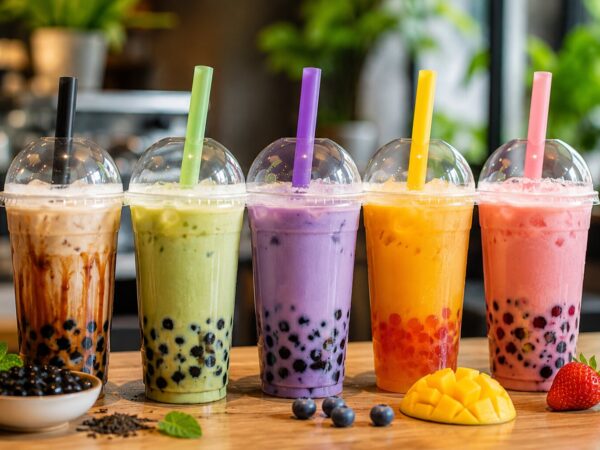
It is widely used for beverage, salad, dessert, and food packaging where aesthetics and safety matter.

Polypropylene (PP) and Other Thermoplastics
Polypropylene thermoforming film has high heat resistance and flexibility. It resists moisture and chemicals, making it ideal for hot food and microwave packaging.
PP plastic packaging is used for containers, lids, and ready-meal packaging. ABS, PVC, and PET-G are also used for specialized applications.

Biodegradable and Compostable Films — Benefits and Limitations
Eco-packaging is a growing trend. Biodegradable and compostable films are made from starch, PLA, and other natural polymers.
Advantages:
- reduced carbon footprint;
- environmental safety;
- support for eco-friendly brand image.
Disadvantages:
- high cost;
- equipment sensitivity;
- shape instability during heating and storage.
Such films are ideal for cafés and companies promoting sustainable production.
How Material Properties Affect the Thermoforming Process
Each polymer has unique properties that determine its behavior during heating and vacuum forming.
Key parameters include:
- Film thickness — thicker film provides better stability but increases material consumption.
- Softening temperature — lower in PS than PET, making processing more economical.
- Elasticity and shrinkage — affect shape accuracy and quality.
Proper equipment settings help avoid defects and reduce energy consumption. Manufacturers often test several films before selecting the optimal one.
Environmental Aspects of Material Selection
Modern manufacturing focuses on sustainable packaging materials.
PET and PS are recyclable films that reduce waste. PET often carries environmental certifications and fits well into eco-packaging concepts.
Using recycled raw materials helps companies reduce costs and improve their green image.
Practical Tips for Material Selection
Material choice determines product quality, appearance, and cost. PET film suits cold dishes and salads, PP suits hot meals, and PS is a universal solution for cups and trays.
Equipment compatibility is essential, as different polymers require specific temperatures and pressures. Balance price and quality — cheap materials may cause defects.
Modern trends favor recyclable and eco-friendly materials such as recycled PET and biodegradable films. Testing is recommended before mass production.
The main goal is to choose a solution that combines strength, safety, aesthetics, and cost efficiency.
Examples of Material Use in Food Packaging
PS film — cups, lids, trays, fast-food containers. Rigid, transparent, economical.
PET film — salads, desserts, fruits, beverages. Strong, deformation-resistant, highly transparent.
PP film — hot meals, microwave packaging, soups, dairy products. Heat-resistant, moisture-proof, safe.
Biodegradable films — eco-packaging for cafés and restaurants. Environmentally friendly but more expensive.
Combined materials (PET/PE) — vacuum and airtight packaging for meat and frozen products.
Conclusion: How to Choose the Best Material for Your Business
The optimal choice balances aesthetics, safety, and profitability. Select packaging material that matches your technical capabilities and product type.
Material selection is a strategic decision affecting quality, cost, and brand perception. Optipak offers a wide range of thermoforming films for efficient and sustainable production.
-
 How to Choose PET Film for Thermoforming: Characteristics and Application FeaturesMore details
PET film for thermoforming is selected according to the specific product, mold, and production line...
-
Bubble Tea and What It’s All About: A Guide to the Main Summer Trend for Ukrainian Coffee ShopsMore details
With the arrival of warm weather, the streets of Ukrainian cities fill with people again:...
-
From Restaurant Presentation to Picnic: Ukrainian Food Court Trends and the Role of Quality PackagingMore details
The modern HoReCa market in Ukraine is actively changing along with consumer habits. With the...
-
The future of disposable tableware: eco-friendly materials and sustainable solutionsMore details
The modern packaging market is rapidly changing under the influence of global environmental challenges and...
-
Why transparent PET cups are a must-have for your coffee shop this spring?More details
With the first warm days, not only people’s wardrobes change, but also their taste preferences....