How a Coffee Shop Can Reduce Packaging Costs: Purchasing Directly from the Manufacturer
- Pricing “Under the Microscope”: What the Cost of a Cup Is Really Made Up Of
- Hidden Traps of Intermediaries: How Complex Distributor Logistics Eat Away at Your Margin
- Economics in Numbers: A Direct Calculation of Savings When Switching to Purchases from Optipak
- Contract Manufacturing in Ukraine: Why Optipak Is More Reliable Than Imports
- How to Calculate Your Cup Stock for the Season Without Freezing Working Capital
Every coffee business owner knows that the profitability of an establishment depends on many small details. The margin on a single cup of espresso or latte looks attractive; however, the final profit at the end of the month often turns out to be lower than expected. One of the main reasons for budget leakage is unaccounted expenses on consumable materials. By purchasing packaging through chains of intermediaries, a coffee shop regularly loses funds that could have been used for network development or marketing. That is why wholesale disposable tableware from the manufacturer becomes a key factor in budget optimization.
When an entrepreneur decides to buy plastic cups wholesale, Ukraine offers a huge selection of suppliers. However, the overwhelming majority of them are sales agents and wholesale resellers. Switching to direct cooperation with the Ukrainian manufacturer Optipak makes it possible to eliminate intermediary markups and take full control of the quality and logistics of consumable materials.
Pricing “Under the Microscope”: What the Cost of a Cup Is Really Made Up Of
To understand exactly where a coffee shop is losing money, it is necessary to examine how the production cost of disposable tableware is formed. When it comes off the factory production line, a cup has a minimum price, which includes the cost of primary granulated raw material—usually safe food-grade polypropylene or PET—electricity costs, depreciation of high-tech equipment, and staff wages.
When a fair price for a plastic cup from the manufacturer is formed, it does not include the marketing budget of third-party retail chains or sales managers’ commissions. The Optipak factory optimizes processes at every stage:
- Modern thermoforming lines help reduce the number of manufacturing defects and maintain consistent product geometry.
- Direct purchases of polymers in large batches make it possible to maintain the minimum production cost per unit.
- Process automation eliminates the human factor and unnecessary operating expenses.
The complex production of plastic containers requires strict compliance with technological standards, wall thickness, and product geometry so that the lid fits perfectly tightly. By purchasing directly, you pay only for the product itself and its actual quality.
Hidden Traps of Intermediaries: How Complex Distributor Logistics Eat Away at Your Margin
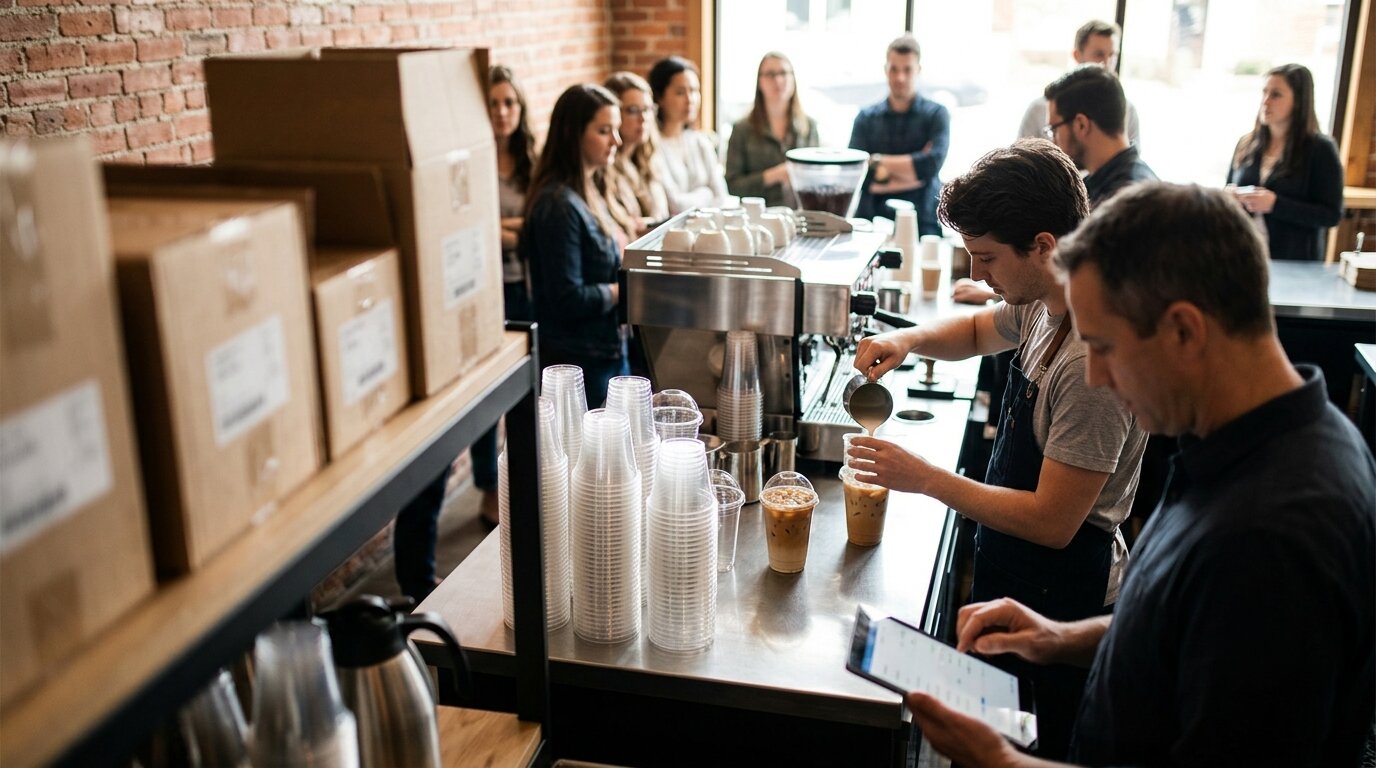
The main problem with working with distributors is that their trade markup is only the tip of the iceberg. The real “pitfalls” lie in a complex and inefficient logistics chain. The standard route of goods from the factory to the end consumer through resellers looks like this: factory — large wholesaler — regional distributor — local warehouse — your coffee shop.
Additional expenses are added at each of these stages. As a result, distributors’ markup on packaging may amount to much more than the factory’s initial cost. The key problems of working with intermediaries include:
- Uncontrolled delivery of tableware for coffee shops. The products are reloaded several times, which increases the risk of deformation and damage to the packaging during transportation.
- Disrupted delivery deadlines. If the distributor runs out of the required product range, your coffee shop is left without cups at the peak of sales.
- Financial risks. You are forced to overpay for other people’s logistics mistakes and the maintenance of a huge staff of sales representatives.
Many suppliers of disposable tableware in Ukraine do not have their own warehouse stocks and operate using a reordering system, which creates constant delays. Direct cooperation with Optipak completely eliminates these risks.
Economics in Numbers: A Direct Calculation of Savings When Switching to Purchases from Optipak
Let us turn to specific figures and make a direct calculation of the expenses of a medium-sized coffee shop.
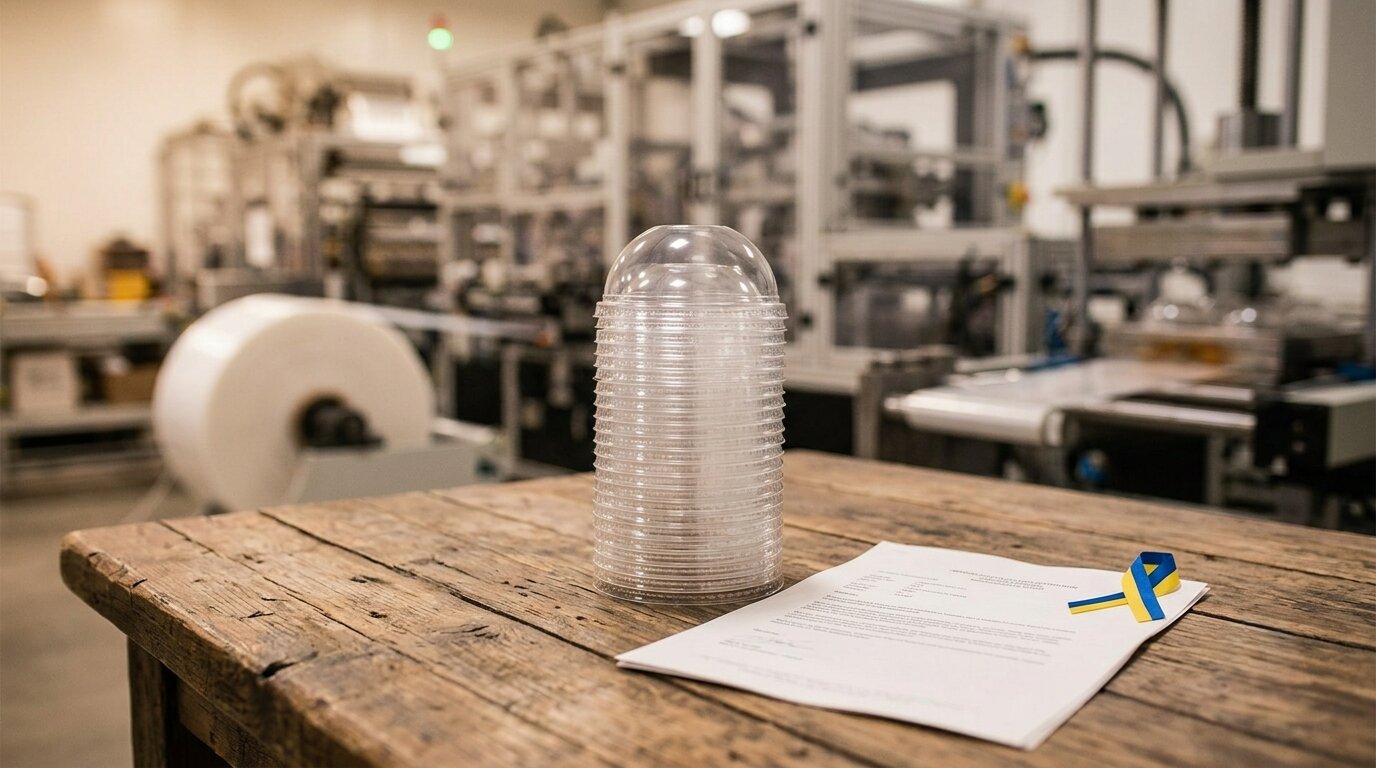
Let us take a popular format: a coffee shop sells an average of 250 cold takeaway drinks per day (iced latte, Bumble coffee, lemonades, fresh juices, and smoothies). The most popular volume — a 420 ml dome cup — is ideal for these purposes. Monthly consumption of such packaging amounts to approximately 7,500 units.
Let us compare the expenses when purchasing through distributors and directly from the manufacturer (the calculations are approximate):
- Purchasing through intermediaries: Taking into account the markups of sales agents, a similar set (420 ml cup + dome lid) costs the coffee shop an average of UAH 4.30.
7,500 pcs. * UAH 4.30 = UAH 32,250 per month.
- Direct contract with Optipak: At the Optipak factory, the price of a 420 ml dome cup starts at only UAH 2.3, while the dome lid for it starts at UAH 0.85. Thus, the complete set costs only from UAH 3.15.
7,500 pcs. * UAH 3.15 = UAH 23,625 per month.
The net savings amount to UAH 8,625 per month on just one item!
Calculated over a year, this amounts to UAH 103,500 of preserved budget that previously went toward paying for logistics and reseller margins. If you are planning to buy dome cups wholesale, direct purchases from the Optipak manufacturer will allow you to direct the released funds toward purchasing high-quality coffee beans, marketing, or opening a new location.
Contract Manufacturing in Ukraine: Why Optipak Is More Reliable Than Imports
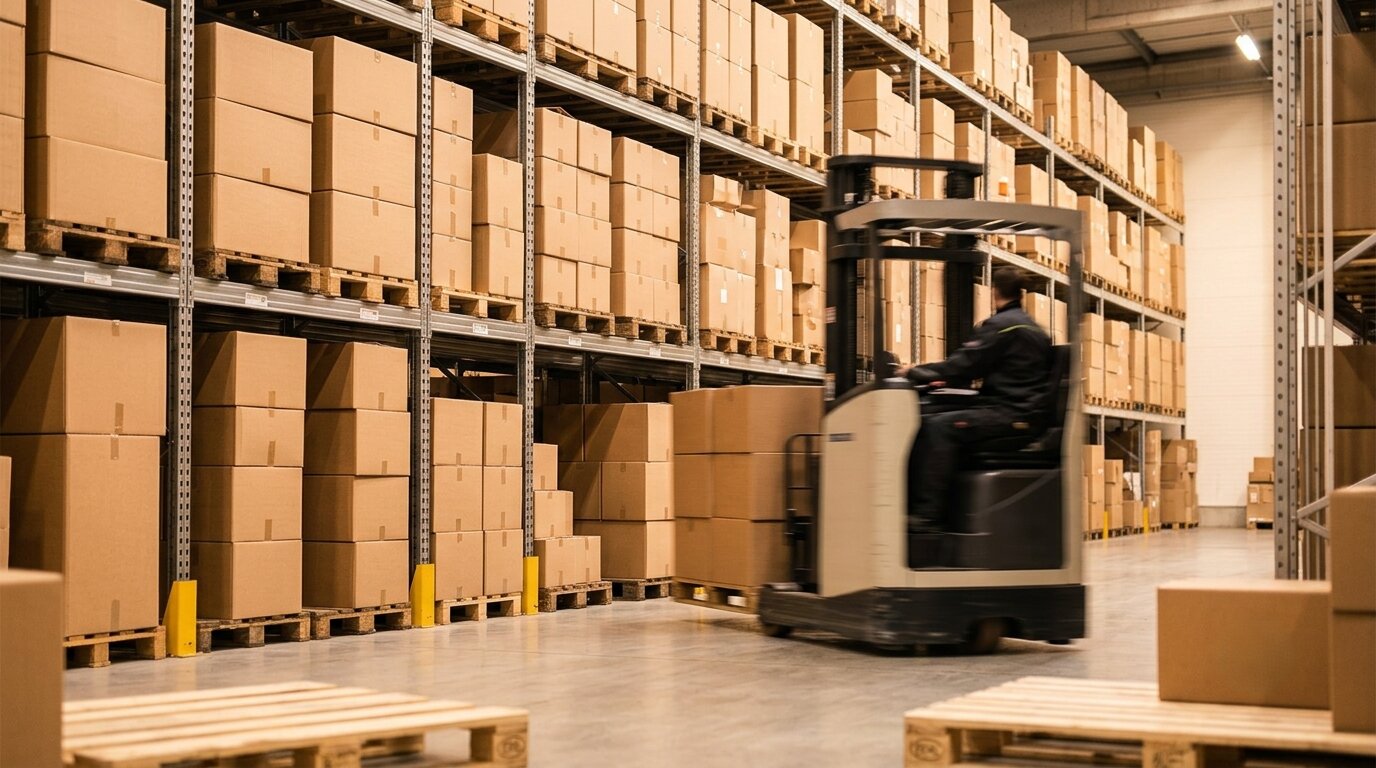
For a long time, many procurement specialists focused on imported products, considering them more affordable. However, modern realities have completely changed the rules of the game. Imports from Europe or Asia today are associated with serious risk factors: exchange rate fluctuations, complex customs procedures, delays at borders, and the high cost of international logistics.
Under these conditions, Ukrainian production of plastic tableware demonstrates maximum stability. The Optipak factory is a modern domestic production facility for plastic tableware that operates according to European quality standards.
By choosing our plastic cup manufacturing plant, you immediately receive several tangible advantages:
- Independence from borders and currency fluctuations. Product prices remain stable and predictable.
- Order fulfillment speed. Shipments from the company’s warehouse are carried out as quickly as possible, since the logistics distance within the country is minimal.
- Quality control. Only certified food-grade raw materials that are safe for human health and free from foreign odors are used.
How to Calculate Your Cup Stock for the Season Without Freezing Working Capital
Proper inventory management is a balance between the uninterrupted operation of a coffee shop and the efficient use of finances. To correctly calculate the monthly consumption of disposable cups, use a simple formula:
- Take the average daily consumption for the previous month.
- Add 15–20% for seasonal demand growth, especially for cold drinks.
- Multiply by 30 days and add a 10% safety stock in case of spikes in customer traffic.
Cooperation with Optipak provides an important advantage: a reasonable minimum order quantity for plastic cups allows you to purchase products at wholesale prices without freezing your budget. You do not need to overload your premises: reliable warehouse storage of packaging at the factory and regular on-time deliveries eliminate shortages and save space at your location.
-
 Sauce Cups and Mini Containers (10–50 ml): Closure Options, Materials, and Leak Resistance During TransportationMore details
In food delivery, every packaging detail matters. Food containers will not save an order if...
-
How Packaging Affects Ratings on Glovo and Bolt Food: A Guide for Restaurants and Coffee ShopsMore details
Delivery customers evaluate not only the taste but also the condition of the order when...
-
Dome-Lid Cups for Summer Drinks: How to Choose the Ideal Packaging for a Coffee Shop or Fast-Food BusinessMore details
The summer season is the peak period for selling refreshing cocktails, iced coffee, smoothies, and...
-
How to Start a Sushi Delivery Business from Scratch: A Step-by-Step Guide for EntrepreneursMore details
The fast-food industry continues to demonstrate steady growth, while Japanese cuisine firmly maintains its leadership...
-
Bubble Tea and What It’s All About: A Guide to the Main Summer Trend for Ukrainian Coffee ShopsMore details
With the arrival of warm weather, the streets of Ukrainian cities fill with people again:...