Sauce Cups and Mini Containers (10–50 ml): Closure Options, Materials, and Leak Resistance During Transportation
- 1. The Role of Sauce Cups in Delivery: Why the Leak Resistance of Small Containers Affects Customer Loyalty
- 2. Material Overview: PP (Polypropylene) vs PET (Polyethylene Terephthalate)
- 3. Types of Closures and Lids: How to Prevent Leaks During Courier Delivery
- 4. Volume Gradation (10, 20, 30, 50 ml) for Different Types of Dishes
- 5. Wholesale Supply of Sauce Cups from the Optipak Manufacturer: The Economics of Order Packaging
In food delivery, every packaging detail matters. Food containers will not save an order if the sauce leaks and stains the box or the main dish. Liquid dressings, oil, soy sauce, and fatty emulsion mixtures are especially demanding when it comes to packaging. Therefore, small-volume containers for liquid products are chosen not only based on price and capacity, but also on material, lid design, closure tightness, and resistance to shaking.
1. The Role of Sauce Cups in Delivery: Why the Leak Resistance of Small Containers Affects Customer Loyalty
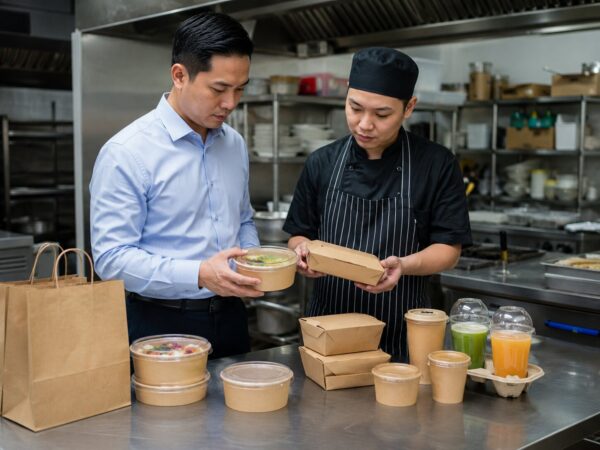
For the customer, delivery begins not with the first bite of the dish, but with opening the bag. If everything inside is clean, the boxes are dry, and each sauce remains in its own container, the order looks neat and inspires confidence. A leaking container, on the contrary, can spoil the impression even of delicious food.
It is especially important to choose the right sauce containers for liquid and fatty products. Soy sauce can easily seep through a loosely closed lid, while mayonnaise-based, creamy, and oil-based dressings can get into the closure area and reduce the quality of the seal if the container design is selected incorrectly.
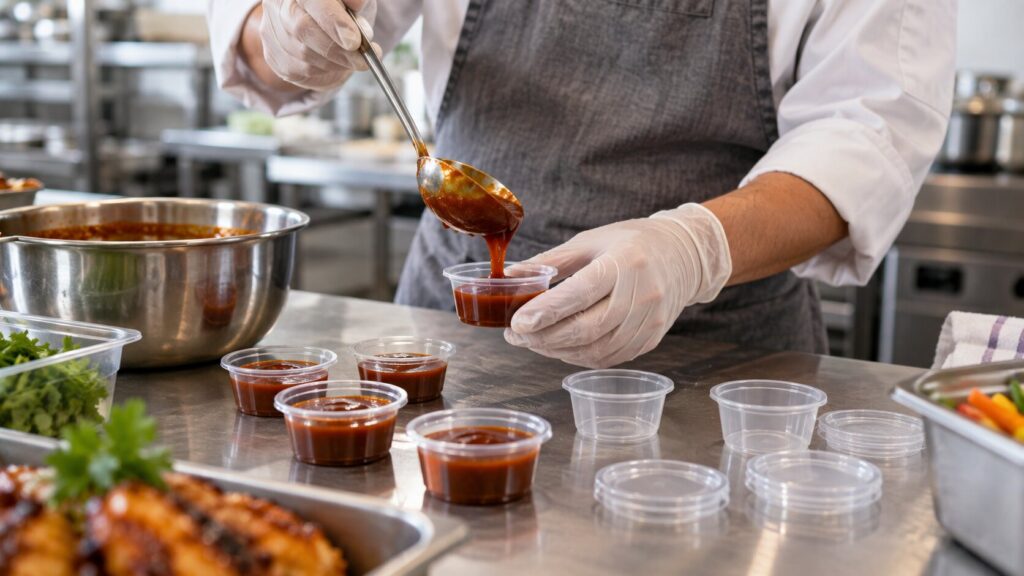
Good disposable sauce packaging should withstand not only filling in the kitchen, but also real delivery conditions: carrying the bag, tilting, vibrations from a car or bicycle, and placing several orders in a thermal delivery bag. Therefore, disposable sauce cups are evaluated by closure tightness, rim rigidity, lid shape, and the stability of the connection around the entire perimeter.
Reliable food delivery packaging helps preserve the presentable appearance of the order and reduces the risk of complaints, returns, and negative reviews.
2. Material Overview: PP (Polypropylene) vs PET (Polyethylene Terephthalate)
For mini containers, plastics with different performance properties are most commonly used. Polypropylene sauce cups are valued for their flexibility and resistance to elevated temperatures. PP is less prone to brittle failure under compression, making it well suited for delivery and filling with warm sauces. For use in a microwave oven, it is necessary to follow the labeling of the specific product and the manufacturer’s recommendations.
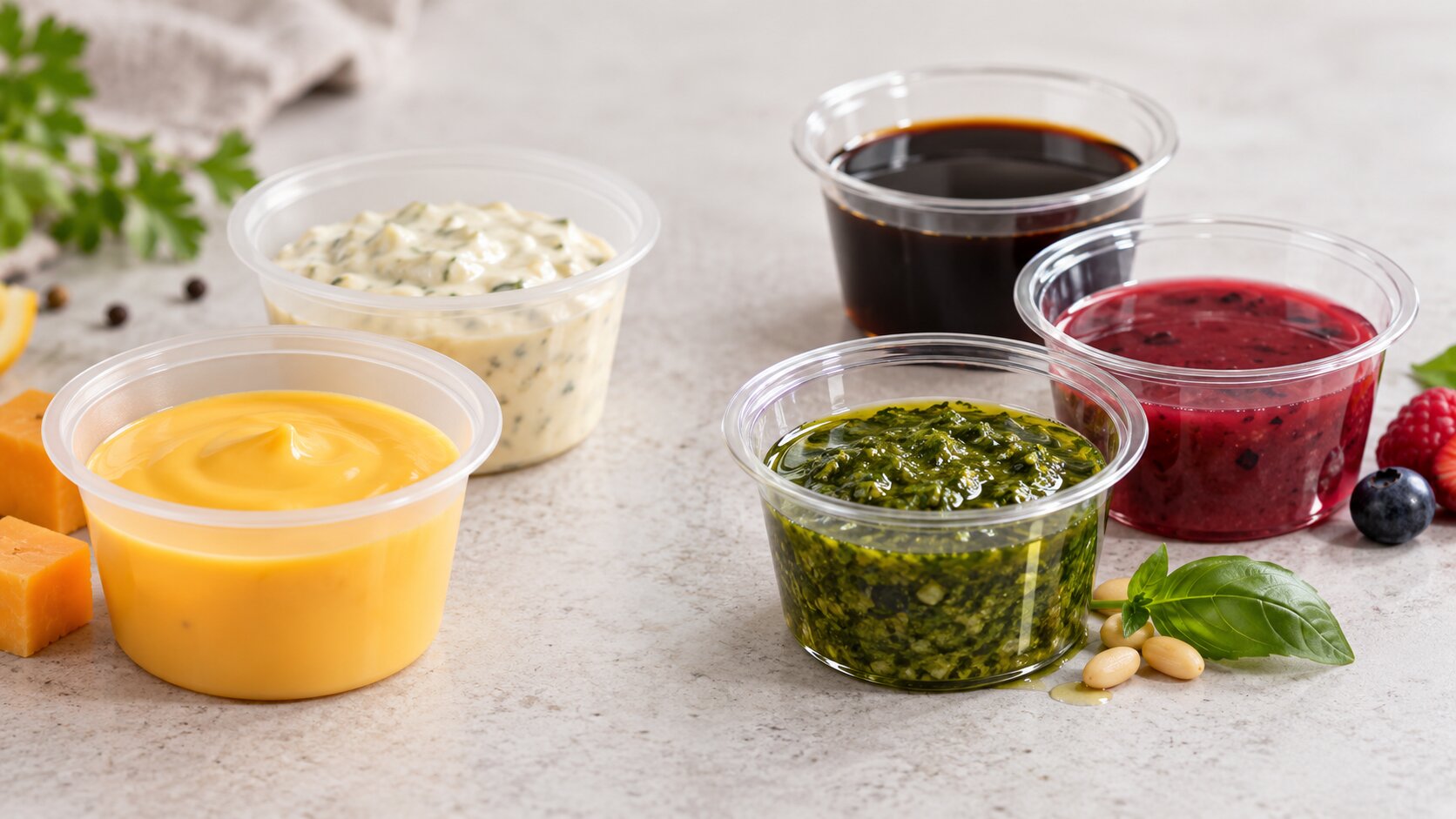
Disposable PET sauce cups are chosen primarily for their transparency. The color and consistency of the product are clearly visible through the walls, so this type of packaging is suitable for pesto, berry sauces, herb dressings, dessert toppings, and other cold products where presentation is important. PET is characterized by rigidity and a glossy surface, which allows a filled sauce cup to look neat and attractive in an order.
When comparing the materials by purpose, PP is convenient where flexibility and temperature resistance are important, while PET is preferable where transparency and visual presentation come first. Plastic food packaging should be suitable for the temperature of the contents and the chosen closing method.
Volume should also be taken into account separately. A 40 ml sauce cup is suitable for a standard portion of ketchup, cheese, garlic, or mayonnaise sauce. A 50 ml sauce cup is convenient for a larger portion, thick dressings, dips, and additions to large sets.
3. Types of Closures and Lids: How to Prevent Leaks During Courier Delivery
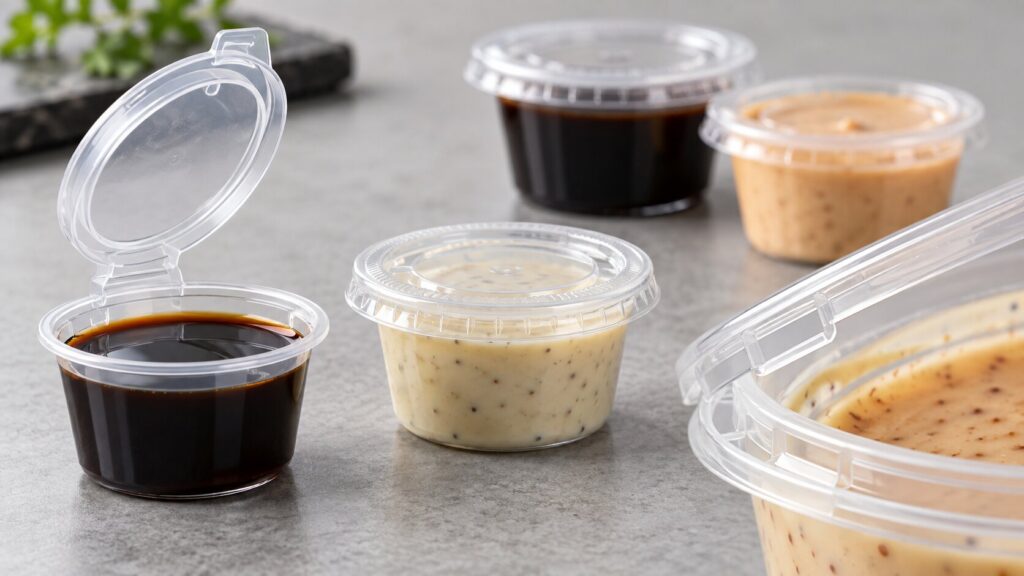
Sauce cups with lids can have several design options. One of the most convenient options for quickly assembling orders is a sauce cup with a hinged lid. The lid is attached to the container, so staff do not need to match two separate parts. After filling, it snaps shut around the perimeter and remains securely fixed during transportation.
The second option is a sauce container with a removable lid. This system is convenient when there is a high volume of orders, provided that the container and lid are fully compatible. The main requirement here is uniform fixation around the entire circumference without any areas that are not completely closed.
Several design elements affect leak resistance:
- a perimeter closure that secures the lid around the entire circumference;
- a double snap closure or reinforced connection profile;
- sufficient rim rigidity so that it does not deform during closing;
- a sealing contour that reduces the likelihood of liquid leakage;
- proper filling without sauce getting onto the closure line.
During courier delivery, the container is constantly exposed to small impacts and shaking. When shaken, the liquid creates short-term pressure on the lid. Therefore, reliability is better tested not only by turning the sauce cup upside down, but also through a shaking test, side positioning, and several carrying cycles.
For liquid sauces, it is advisable to conduct testing with the actual product that will be packed. Water, thick tartar sauce, and oil-based dressing behave differently, so the same closure may show different results.
4. Volume Gradation (10, 20, 30, 50 ml) for Different Types of Dishes
The size of the mini container should be selected according to the actual portion rather than using one format for the entire menu. A sauce cup that is too large increases plastic consumption and takes up space in the packaging, while one that is too small creates a risk of overfilling and product getting onto the closure.
The volumes can be conditionally distributed as follows:
- 10 ml – wasabi, mustard, concentrated spices, and small portions of additives;
- 20 ml – a small portion of soy sauce, ginger, hot sauce, or syrup;
- 30 ml – ketchup, barbecue sauce, garlic sauce, cheese sauce, small portions of toppings;
- 40-50 ml – mayonnaise-based sauces, tartar sauce, thick dips, salad dressings, large portions of sauce for hot dishes.
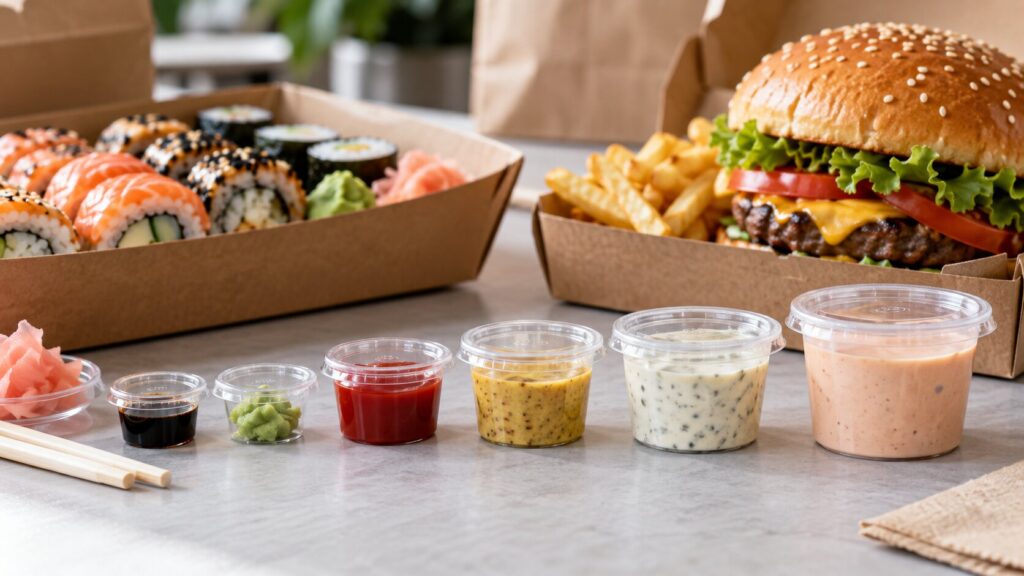
For Japanese food delivery, sauce cups for sushi are especially in demand: soy sauce, wasabi, ginger, and additional dressings can be packed separately. With a large assortment, it is convenient to keep several sizes available so as not to overpay for unnecessary packaging volume.
If consumption is stable, it is more rational to order sauce cups wholesale. This simplifies packaging inventory management and helps maintain the same order configuration during every shift. Before buying disposable sauce cups in a large batch, it is worth testing several options by volume, material, and lid type.
5. Wholesale Supply of Sauce Cups from the Optipak Manufacturer: The Economics of Order Packaging
For cafes, restaurants, sushi bars, delivery services, and food production businesses, packaging is a constant expense item. Therefore, buying plastic sauce cups in Ukraine is more cost-effective not separately from the main packaging, but as part of a planned purchase of packaging materials. This makes it easier to calculate stock levels, coordinate product characteristics, and reduce the number of small orders from different suppliers.
Optipak manufactures plastic food packaging and offers solutions for packing sauces, including small containers. When selecting packaging, volume, material, product temperature, closing method, and transportation conditions are taken into account. For businesses that need disposable tableware wholesale from the manufacturer, this approach makes it possible to create a packaging set for a specific menu and kitchen workflow.
Purchasing sauce cups wholesale together with the main containers helps standardize packaging and control the cost of each order more accurately. Properly selected mini packaging also solves several tasks at once: it protects dishes from leaks, preserves a neat presentation, and makes delivery more reliable for the customer.
-
 How Packaging Affects Ratings on Glovo and Bolt Food: A Guide for Restaurants and Coffee ShopsMore details
Delivery customers evaluate not only the taste but also the condition of the order when...
-
Dome-Lid Cups for Summer Drinks: How to Choose the Ideal Packaging for a Coffee Shop or Fast-Food BusinessMore details
The summer season is the peak period for selling refreshing cocktails, iced coffee, smoothies, and...
-
How a Coffee Shop Can Reduce Packaging Costs: Purchasing Directly from the ManufacturerMore details
Every coffee business owner knows that the profitability of an establishment depends on many small...
-
How to Start a Home Bakery and Sell Desserts Through InstagramMore details
Turning a passion for baking into a stable source of income is a dream for...
-
How to Start a Sushi Delivery Business from Scratch: A Step-by-Step Guide for EntrepreneursMore details
The fast-food industry continues to demonstrate steady growth, while Japanese cuisine firmly maintains its leadership...