How Packaging Affects Ratings on Glovo and Bolt Food: A Guide for Restaurants and Coffee Shops
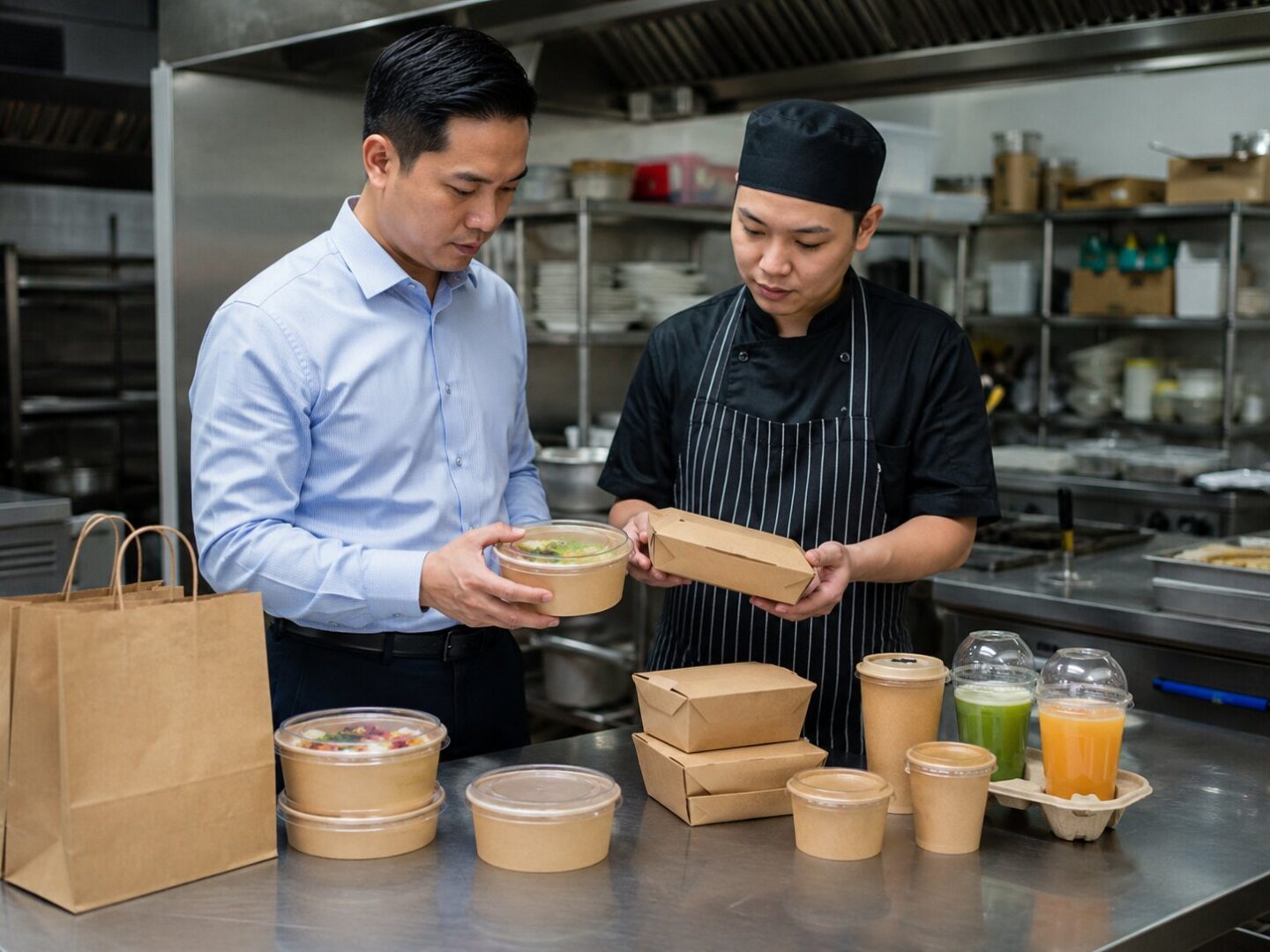
- Ratings on Aggregators as a Key Sales Driver in the HoReCa Segment
- 3 Main Packaging Defects That Can Destroy an Establishment’s Rating
- Optipak Technologies for Preserving the Quality of Food and Beverages
- Optimizing Kitchen Operations: How Packaging Speeds Up Order Handover
- Restaurant Checklist: Check Your Packaging Before Dispatch
Delivery customers evaluate not only the taste but also the condition of the order when they receive it. Soggy fries, spilled coffee, leaking soup, a crushed dessert, or a dented container are perceived as the establishment’s mistake. Therefore, food delivery packaging affects the customer experience and, indirectly, the restaurant’s rating.
Ratings on Aggregators as a Key Sales Driver in the HoReCa Segment
Users see the rating on Glovo before placing an order. When Bolt Food delivery is used, the rating also affects trust, the willingness to open the establishment’s page, and the decision to place an order. For HoReCa B2B, packaging becomes part of the operational quality of delivery.
A rating below 4.5 is not an official threshold set by Glovo or Bolt Food, but rather a practical warning sign. Compared with establishments rated 4.7–4.9, a page with a lower score may appear less reliable. The exact ranking formulas used by aggregators have not been publicly confirmed, so it would be incorrect to associate a 4.5 rating with automatic ranking demotion.
Example: the fries were prepared correctly but placed in unsuitable packaging. After 30 minutes, the customer received a soft product and left a low rating. Packaging mistake → poor condition of the order → negative review → lower average rating → weaker-looking page compared with competitors → potentially fewer orders. The same applies to spilled lemonade, leaking soup, or a crushed dessert.
3 Main Packaging Defects That Can Destroy an Establishment’s Rating
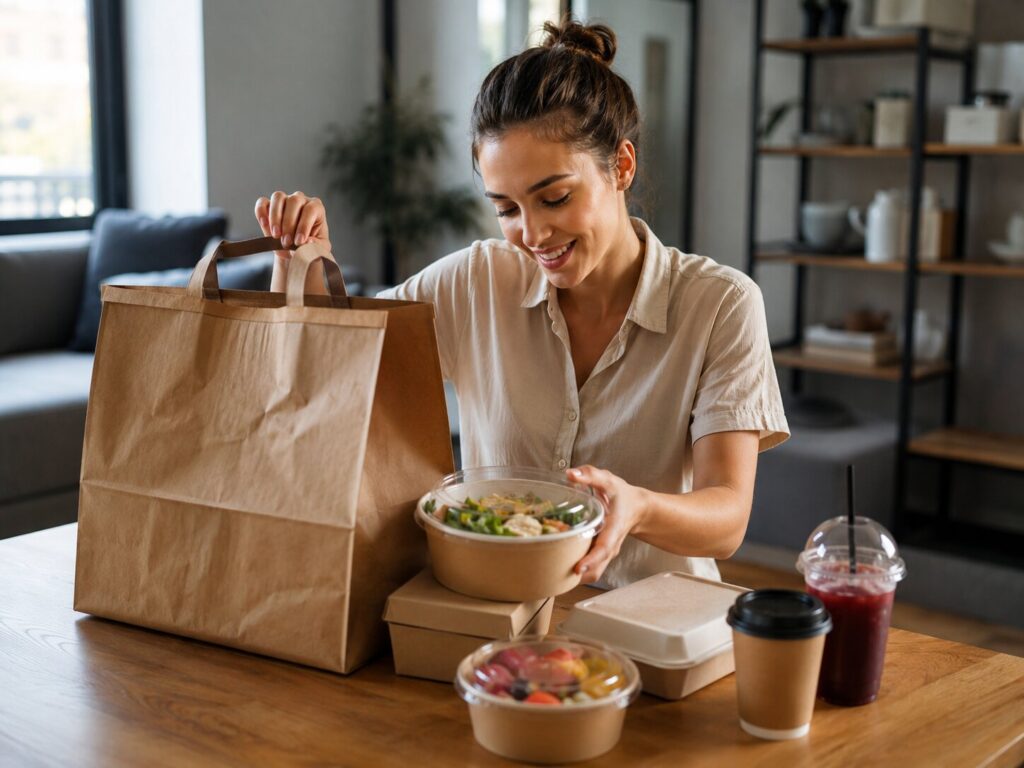
Three common risks are condensation and loss of texture, liquid spills, and deformation during transportation and stacking.
Sogginess and Loss of Crispness: The Condensation Problem
Hot food releases steam. In a closed container, moisture settles on the walls and lid and then returns to the food. This is how condensation in packaging softens French fries, nuggets, breaded snacks, and reduces the preservation of product texture.
When choosing packaging, consider the food temperature, delivery time, amount of steam, ventilation, and the type of product. Airtightness is not always a disadvantage: for soups and sauces, it is necessary. One type of container should not be used for the entire menu without testing.
Liquid Spills: How to Safely Deliver Soups and Beverages
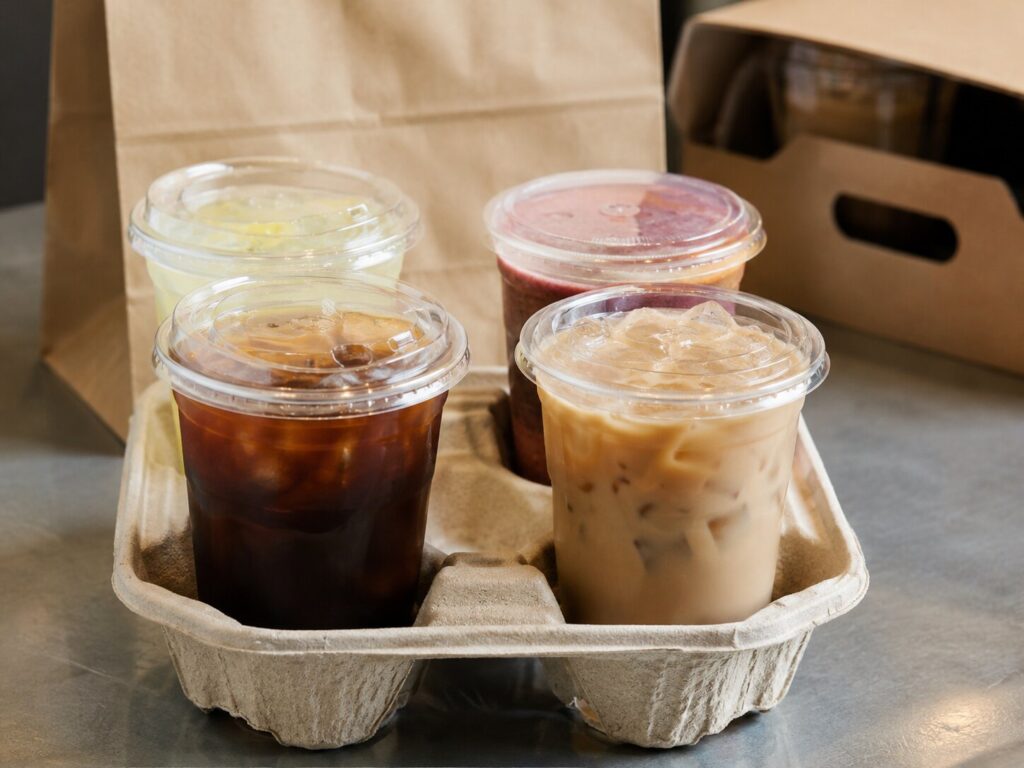
Spill-free beverage delivery depends on the compatibility of the cup and lid, wall rigidity, stability, and sealing. Coffee, iced lattes, lemonades, juices, smoothies, soups, and sauces require delivery cups selected for the specific product.
Cold brew packaging should remain stable and close securely. Additional sealing may be used when necessary, but neither a lid nor film provides absolute protection.
Deformation and the “Domino Effect” in Vertical Stacking
In a large order, containers are stacked on top of one another. If the bottom container cannot support the weight of the food, the lid bends, the walls change shape, sauce may leak out, and the upper containers lose stability. This is how container deformation creates a “domino effect.”
Durable packaging should be tested with actual food inside. Before purchasing in bulk, it is useful to assemble a typical order, stack several filled containers vertically, and assess the condition of the bottom container after transportation.
Optipak Technologies for Preserving the Quality of Food and Beverages
Cup Sealing and Thermoforming: Maximum Tightness
Cup sealing can be used as an additional closure method. Compatibility is essential: cup + film + equipment. Sealing film must correspond to the material and parameters of the packaging; it is not the same as a regular lid.
Thermoforming of tableware is the process of shaping packaging from sheet or roll material under the influence of heat and a mold. PET film and thermoforming film may be used in production if the material is suitable for the technology and intended use of the packaging. Not every type of PET is suitable for every temperature or food product.
Polypropylene tape is used in production processes, but its purpose depends on the specific product and technology. It should not be associated with cup sealing without a proper technical basis.
Reliable Plastic Cups and Lids for Cold and Hot Beverages
The Optipak range for coffee shops, delivery, and To Go includes plastic cups, cups for sealing, and lids. For coffee, tea, or cocoa, the intended use of the cup, diameter, lid compatibility, secure fit, and transportation scenario should be checked. Not every plastic cup is designed for hot beverages.
For cold brew, iced lattes, lemonades, smoothies, juices, and cocktails, suitable formats with flat or dome lids are used. A flat lid is suitable for standard serving, including drinks with a straw if the design allows it. A dome lid provides extra space for cream, toppings, or a more voluminous presentation.
For delivery, the selection process works as follows: beverage → delivery format → cup → lid or film → transportation. When sealing is used, the compatibility of the cup, film, and equipment should be checked. For chains, this helps separate solutions for To Go and delivery.
Cups for coffee shops in bulk are more convenient to purchase as a system of compatible items. Disposable tableware from the Optipak manufacturer can be selected for the needs of HoReCa, Fast Food, and To Go.
Optimizing Kitchen Operations: How Packaging Speeds Up Order Handover
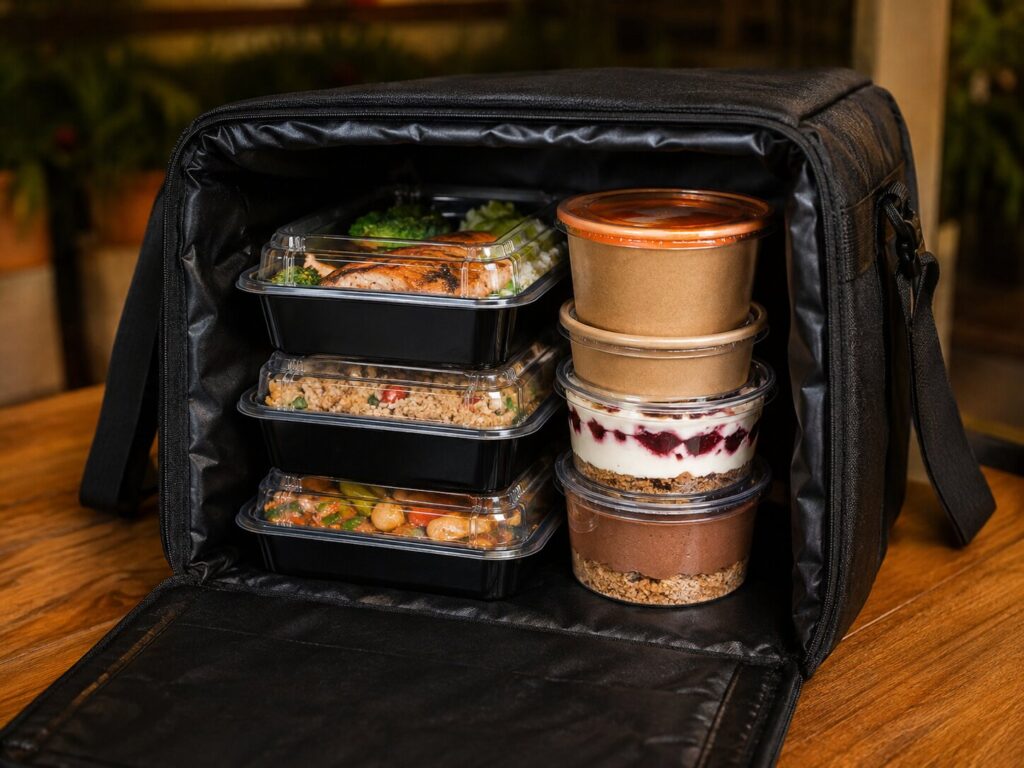
Before handing an order to the courier, an employee takes the required packaging, finds the correct lid, portions the product, closes it, labels it, and packs the order. If employees have to search for a compatible lid or redo a poorly closed container, kitchen packing speed decreases.
An illustrative 20–30 seconds of unnecessary actions per item can add up during peak hours; this is only an example. Delivery process optimization begins with standardizing containers and lids.
Restaurant Checklist: Check Your Packaging Before Dispatch
A packaging audit of the establishment is best carried out using real dishes and actual delivery routes:
- Condensation. Pack a hot dish and, after 20–30 minutes, assess the moisture, crispness, breading, texture, and appearance.
- Leakage. Fill the packaging with an actual drink, soup, or sauce and simulate carrying, tilting, and light vibration.
- Stacking. Place filled containers on top of one another and check lid bending, the walls, and the stability of the bottom container.
- Test delivery. Send an order along a typical route and assess the temperature, appearance, texture, leakage, and condition of the packaging.
- Assembly time. Time the sequence: “filling → closing → labeling → packing → handover to the courier.”
- Compatibility. Check the cup and lid, container and lid, cup and film, as well as the packaging and sealing equipment.
- From the customer’s perspective. Assess cleanliness, absence of leaks, ease of opening, cup stability, and the condition of the product.
Regular audits help identify weak points before they lead to complaints. HoReCa tableware from Optipak can be selected according to the type of product, To Go format, or delivery needs.
Delivery quality is shaped before the courier picks up the order. Packaging should preserve the shape and texture of the food, reduce the risk of spills, withstand transportation, and avoid slowing down kitchen operations. Packaging should be tested regularly and selected for the specific product.
Optipak is a manufacturer of packaging solutions for HoReCa, To Go, and delivery that understands the real needs of restaurants and coffee shops. We help select cups, lids, film, and other types of packaging for specific products and processes. Trust packaging to professionals — choose Optipak for stable and efficient business operations.
-
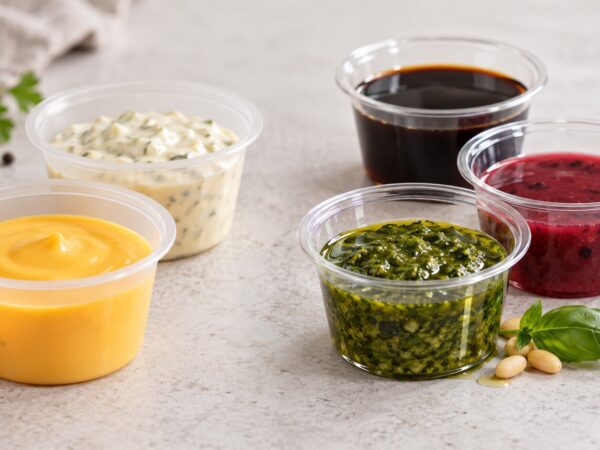
 Sauce Cups and Mini Containers (10–50 ml): Closure Options, Materials, and Leak Resistance During TransportationMore details
In food delivery, every packaging detail matters. Food containers will not save an order if...
-
Dome-Lid Cups for Summer Drinks: How to Choose the Ideal Packaging for a Coffee Shop or Fast-Food BusinessMore details
The summer season is the peak period for selling refreshing cocktails, iced coffee, smoothies, and...
-
How a Coffee Shop Can Reduce Packaging Costs: Purchasing Directly from the ManufacturerMore details
Every coffee business owner knows that the profitability of an establishment depends on many small...
-
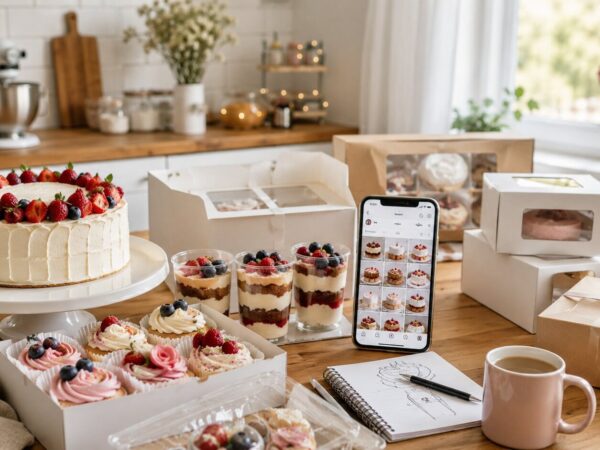
How to Start a Home Bakery and Sell Desserts Through InstagramMore details
Turning a passion for baking into a stable source of income is a dream for...
-
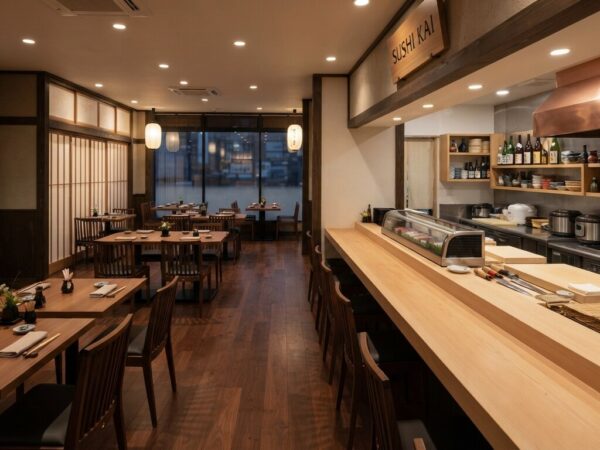
How to Start a Sushi Delivery Business from Scratch: A Step-by-Step Guide for EntrepreneursMore details
The fast-food industry continues to demonstrate steady growth, while Japanese cuisine firmly maintains its leadership...