How to Start a Sushi Delivery Business from Scratch: A Step-by-Step Guide for Entrepreneurs
- Is It Worth Starting a Sushi Delivery Business: Demand, Competition, and Risks
- Where to Start: A Step-by-Step Launch Checklist
- Choosing Packaging and Tableware: How to Deliver Sushi Rolls in Perfect Condition
- Financial Model, Unit Economics, and Payback Period
- Common Mistakes Beginners Make When Launching a Sushi Business
- Conclusion
The fast-food industry continues to demonstrate steady growth, while Japanese cuisine firmly maintains its leadership position in the delivery segment. The desire to order an appetizing sushi set for the evening has become a common habit for millions of people. For entrepreneurs, this market offers enormous opportunities but also imposes strict requirements regarding quality, service, and logistics.
Is It Worth Starting a Sushi Delivery Business: Demand, Competition, and Risks
When launching a new project, every founder asks the same question: is it worth starting a sushi delivery business in a highly competitive environment? The answer is clear: yes, this business remains highly profitable. The market is indeed saturated, but demand for quality products with fast delivery continues to grow. Consumers have become more selective — they instantly abandon brands that offer poor packaging, dried-out fish, or delayed orders.
When evaluating whether it is profitable to start a sushi delivery service, pay attention to the economic indicators. The average profit of a sushi delivery business directly depends on sales volume, but the profit margin of individual items (especially rolls and sets) can reach 200–300%. This makes it possible to recover investments quickly, provided that expenses are managed efficiently and product waste is minimized. The main risks are associated with the short shelf life of raw ingredients. If strict quality control standards are implemented, the business can consistently generate a high income.
Where to Start: A Step-by-Step Launch Checklist
To understand how to open a sushi delivery business without chaos and unnecessary expenses, it is necessary to break the entire process into clear stages. A successful food delivery launch consists of sequential steps, each of which lays the foundation for future business stability. Use this checklist to monitor all processes:
- Competitor and concept analysis. Study the menu, strengths, and weaknesses of local delivery services in your target area. Define your unique selling proposition (USP) — for example, huge premium rolls, express delivery within 29 minutes, or unique signature sauces.
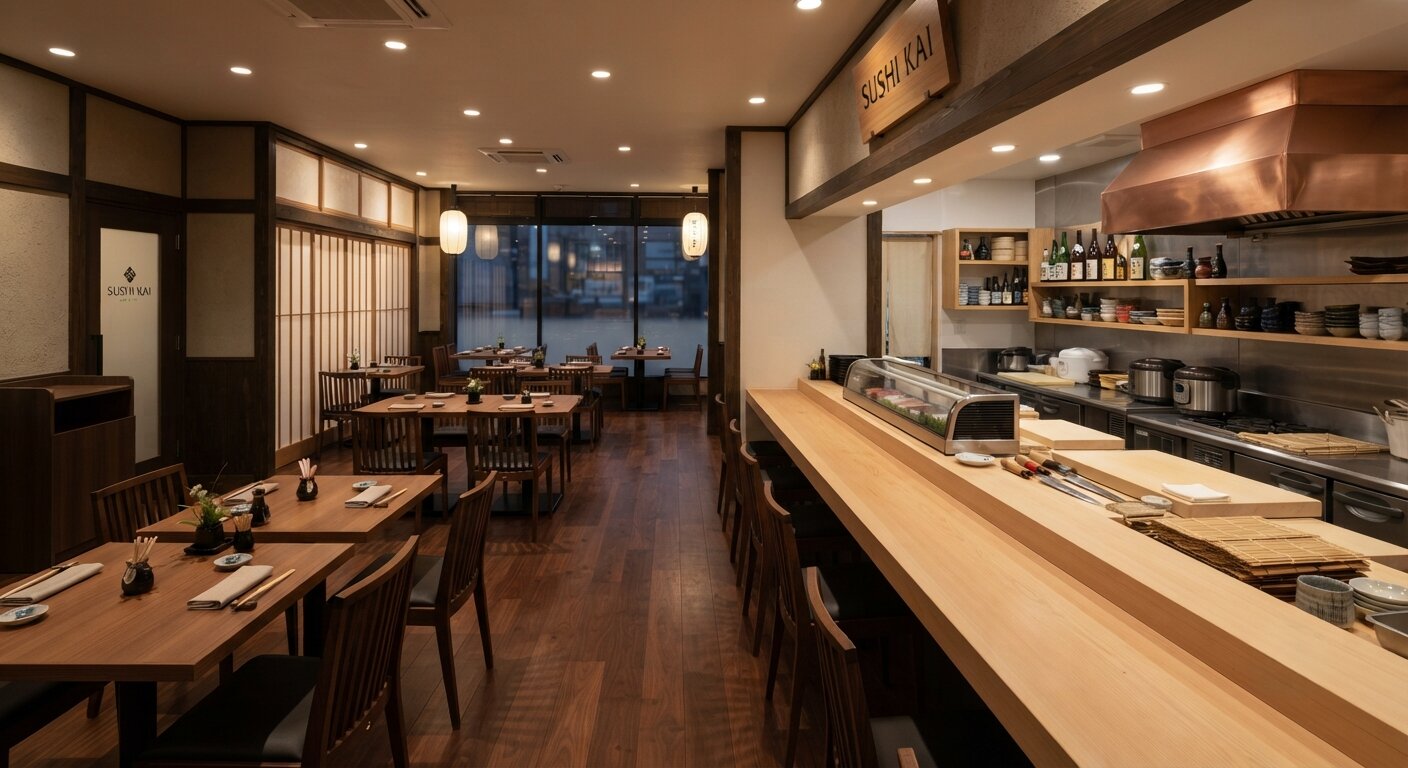
- Choosing a business format. Decide whether it will be a classic Take Away format with a small display counter or an optimized kitchen without a dining area (Dark Kitchen delivery format).
- Legal registration. Register a business entity, choose a taxation system, and prepare the necessary documentation.
- Finding and renting premises. Select a location that complies with strict regulatory requirements and provides a convenient delivery radius for couriers.
- Purchasing equipment and inventory. Equip the kitchen with professional appliances, storage systems, and work surfaces.
- Menu development and supplier search. Create technological recipes together with a chef and select wholesale partners for regular deliveries of fresh fish and basic ingredients.
- Purchasing packaging and consumables. Choose high-quality disposable tableware, sauce containers, and branded packaging elements that ensure product safety during delivery.
- Marketing and IT infrastructure. Develop a website, integrate a CRM system, configure advertising campaigns, and launch sales channels.
A properly organized sushi delivery business begins to show its first results within the first weeks of operation if this checklist is completed without omissions.
Перевод на английский без изменений содержания:
Business Registration, Permits, and Sanitary Requirements
Before accepting your first order, it is necessary to understand how to legally register a sushi delivery business. Most entrepreneurs choose to register as a sole proprietor or a limited liability company. During registration, it is important to correctly specify the business activity codes related to restaurant operations and delivery services.
When preparing documentation for a sushi delivery business, pay maximum attention to compliance with sanitary regulations. Official permits for sushi production include approvals from the sanitary and epidemiological service and the fire inspection authorities. The kitchen must strictly comply with the principles of the HACCP system. This implies control at every stage: from receiving raw materials to packaging the finished roll. Every kitchen employee (including the head sushi chef position) must have a valid medical certificate.
Requirements for Premises and Location
When choosing premises for a sushi delivery business, focus not on pedestrian traffic but on transport accessibility for couriers. The Dark Kitchen sushi format allows you to significantly reduce rental costs by choosing premises in a courtyard or industrial area while remaining close to residential neighborhoods.
Any sushi kitchen must comply with the following standards:
- Zoning and product separation. The premises must be divided into clearly defined zones: a dry storage area, a refrigerated fish storage area, a preparation zone, hot and cold production sections, as well as a dedicated area for assembling and packaging orders. Raw fish must never be stored next to ready-made sauces.
- Ventilation and microclimate. A powerful supply and exhaust ventilation system is mandatory. The temperature at the workplace must be strictly controlled to prevent raw fish from being exposed to critical heating.
- Sanitary finishing. Walls and floors must be covered with materials resistant to disinfection (ceramic tiles). An uninterrupted water supply and regular product labeling are mandatory.
Professional Kitchen Equipment and Suppliers
To ensure consistent taste and high order fulfillment speed, you will need specialized equipment for a sushi delivery business:
- Professional high-capacity rice cookers and thermal containers for storing cooked rice;
- Stainless steel production tables and refrigerated prep tables (saladettes) with gastronorm containers;
- Freezer chests with precise temperature control functions;
- Specialized small equipment: Japanese knives, bamboo rolling mats, and gram-precision scales.
While equipping your sushi kitchen, simultaneously establish relationships with suppliers. When developing a sushi delivery menu, immediately look for reliable channels where you can purchase sushi ingredients wholesale at favorable prices. Pay special attention to where to buy high-quality fish for sushi — salmon, tuna, and eel must be supplied by trusted companies with all required veterinary certificates.
Choosing Packaging and Tableware: How to Deliver Sushi Rolls in Perfect Condition
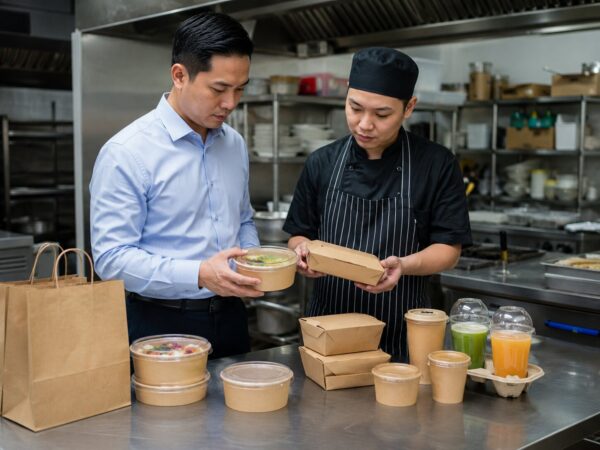
The business logic of food delivery is simple: you can hire the best chef, but if the courier delivers a crushed and leaking mess to the customer, the brand will fail. Sushi containers must have high rigidity to protect against compression inside thermal bags, feature a sealed internal locking mechanism to prevent sauce leakage, and include a transparent removable lid for an attractive presentation of the dish.
To create reliable packaging, the modern industry utilizes advanced plastic product manufacturing technologies. The primary materials used are high-quality PET film and PS film. Raw materials are processed on automated production lines where specialized thermoforming film is used. This method guarantees high resistance to deformation, stable sidewall rigidity, and a perfect lid fit.
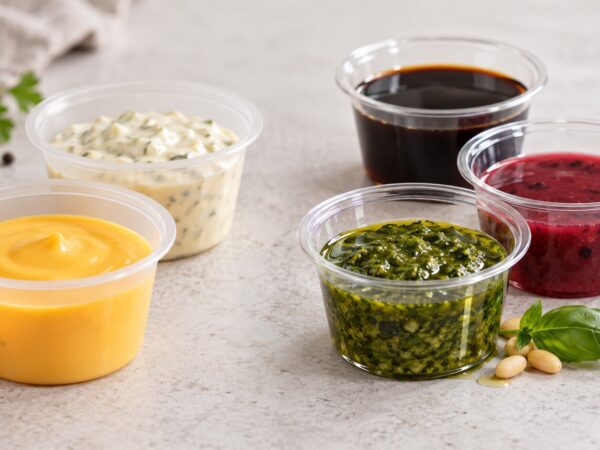
The catalog of the Ukrainian manufacturer Optipak includes ergonomic compartment containers and sauce cups made from safe food-grade plastic, helping to fully preserve the presentation quality of delicate dishes during transportation. In addition, the kitchen should be equipped with convenient sushi chopstick holders, quality napkins, and durable bags.
Logistics Organization, Website, and Sales Channels
To process orders efficiently, you will need a modern, fast sushi delivery website with an intuitive interface synchronized with your internal CRM system.
At the same time, it is worth connecting to external food delivery aggregators (Glovo, Bolt Food). Cooperation with them has its own specifics:
Pros:
- Fast launch;
- Access to a huge ready-made audience of users;
- No need to maintain your own courier staff at the initial stage.
Cons:
- High commission fees (aggregators may take from 25% to 35% of the value of each order);
- Lack of direct contact with the customer database.
The ideal strategy is to use aggregators as a tool for a quick start while simultaneously developing your own website.
Financial Model, Unit Economics, and Payback Period
The success of a sushi business is built on mathematical calculations. The key concept here is unit economics, which means calculating the profitability of a single order. You need to accurately calculate the food cost (ideally within 25–30%), monitor the company’s average order value, and include advertising and packaging expenses in the order price.
| Expense Category | Type of Expense | Approximate Amount (USD) | Purpose |
| Premises Rent | Operating Expenses | $600 – $1,200 | Depends on the size and location of the premises |
| Renovation and Ventilation | Capital Expenditures | $1,500 – $3,000 | Compliance with sanitary and regulatory requirements |
| Kitchen Equipment | Capital Expenditures | $4,000 – $7,000 | Rice cookers, work tables, refrigerators, kitchen tools |
| Initial Raw Material Purchase | Startup Capital | $1,500 – $2,500 | Fish, rice, nori, sauces purchased wholesale |
| Packaging Purchase | Operational | $400 – $700 | Optipak containers, sauce cups, bags |
| Marketing and Website | Startup Capital | $1,000 – $2,000 | Platform development, advertising campaign setup |
| Payroll Fund | Operating Expenses | $2,000 – $3,500 | Administrator, sushi chefs, couriers |
The actual startup capital required to launch a sushi delivery business is approximately $11,000–$20,000. When calculating financial indicators, determine your break-even point — the sales volume required to cover regular monthly expenses. With proper positioning, the average payback period for a sushi delivery business ranges from 6 to 12 months, after which the project begins generating a stable net profit.
Common Mistakes Beginners Make When Launching a Sushi Business
When analyzing the key mistakes made when opening a delivery service, several major factors can be identified that often lead to business failure:
- Saving on raw ingredients. Cheap frozen salmon purchased to reduce food cost instantly ruins the taste of the rolls.
- Lack of standards. Without strict sanitary regulations and shelf-life control, product write-offs increase dramatically.
- Weak logistics. If order delivery time exceeds 1.5 hours, customers will switch to competitors.
- Cheap packaging. The main reason why a sushi delivery service fails to perform properly is the use of thin containers. Rolls become crushed, sauce leaks out, and the brand loses its reputation.
- Ignoring marketing. Without continuous advertising and promotion, the project will quickly run out of orders.
Understanding these fundamental sushi delivery challenges will help you protect your investment from the very beginning.
Conclusion
Launching your own sushi delivery service is a financially promising project that requires close attention to detail. In this business, there are no insignificant details. Your success depends equally on choosing a reliable supplier of fresh salmon and selecting a rigid, airtight container that will preserve the salmon’s perfect appearance on the customer’s table. Calculate your unit economics, choose only high-quality packaging, and confidently develop your brand!
-
 Sauce Cups and Mini Containers (10–50 ml): Closure Options, Materials, and Leak Resistance During TransportationMore details
In food delivery, every packaging detail matters. Food containers will not save an order if...
-
How Packaging Affects Ratings on Glovo and Bolt Food: A Guide for Restaurants and Coffee ShopsMore details
Delivery customers evaluate not only the taste but also the condition of the order when...
-
Dome-Lid Cups for Summer Drinks: How to Choose the Ideal Packaging for a Coffee Shop or Fast-Food BusinessMore details
The summer season is the peak period for selling refreshing cocktails, iced coffee, smoothies, and...
-
How a Coffee Shop Can Reduce Packaging Costs: Purchasing Directly from the ManufacturerMore details
Every coffee business owner knows that the profitability of an establishment depends on many small...
-
How to Start a Home Bakery and Sell Desserts Through InstagramMore details
Turning a passion for baking into a stable source of income is a dream for...