Packaging as a Driver of Average Order Value: 5 High-Margin Strategies for Food Delivery Services and Coffee Shops
- Packaging Economics: Why Cutting Packaging Costs Can Reduce Restaurant Revenue
- Strategy No. 1. Premium Presentation: Turning a Standard Dish into an Expensive Restaurant Set
- Strategy No. 2. Multi-Compartment Upselling: How Divided Containers and Trays Increase Combo Meal Sales
- Strategy No. 3. Build-Your-Own Meals: How Extra Sauces and Toppings Increase Profit Margins
- Strategy No. 4. Managing Size Perception (The Size Decoy Effect) in Coffee Shops and Fast Food Restaurants
- Strategy No. 5. Protecting Food Quality as a Guarantee of Retention Rate (Customer Retention)
- HoReCa Procurement: How to Calculate the Return on Investment in Higher-Quality Packaging
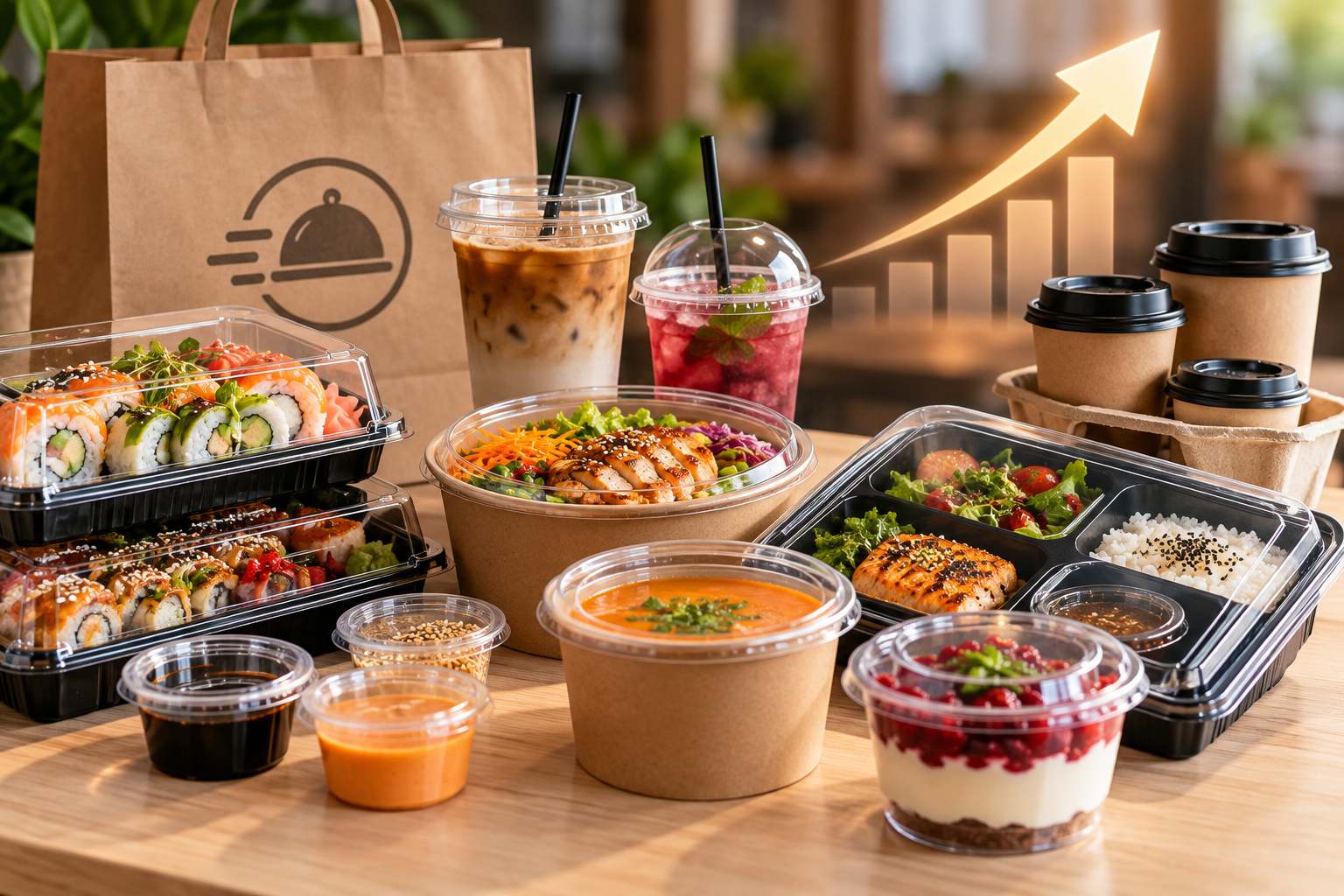
Packaging affects more than just the condition of an order. It determines portion formats, helps sell add-ons, visually increases the perceived value of a dish, and reduces the risk of customers receiving food in poor condition. Therefore, food delivery packaging can serve as a полноценный commercial tool rather than simply a consumable that needs to be as cheap as possible.
If a business is looking for ways to increase the average order value in a restaurant, it should focus on more than just the menu and promotions. Packaging marketing makes it possible to change the structure of an order without offering discounts: introducing meal sets, additional sauces, larger drinks, and more expensive presentation options.
Packaging Economics: Why Cutting Packaging Costs Can Reduce Restaurant Revenue
Restaurant packaging costs are usually included in the cost of an order: containers, lids, cups, sauce containers, and bags. However, a low unit price does not automatically mean savings. If a lid does not close securely, hot food becomes soggy, sauce leaks, or a cup deforms, the restaurant faces refunds, negative reviews, and fewer repeat orders.
The food cost of packaging should be evaluated together with its function. For example, a sturdier container may cost more but also make it possible to sell a premium menu item, maintain an attractive presentation, and reduce customer complaints. In this case, packaging contributes to revenue rather than simply increasing expenses.
The key purchasing question is not “How much does the box cost?” but “What does it allow us to sell, and how much money can it help us save?”
Strategy No. 1. Premium Presentation: Turning a Standard Dish into an Expensive Restaurant Set
The same product is perceived differently when served in an ordinary container versus carefully arranged packaging where ingredients remain separate, the lid closes securely, and the presentation is immediately visible upon opening.
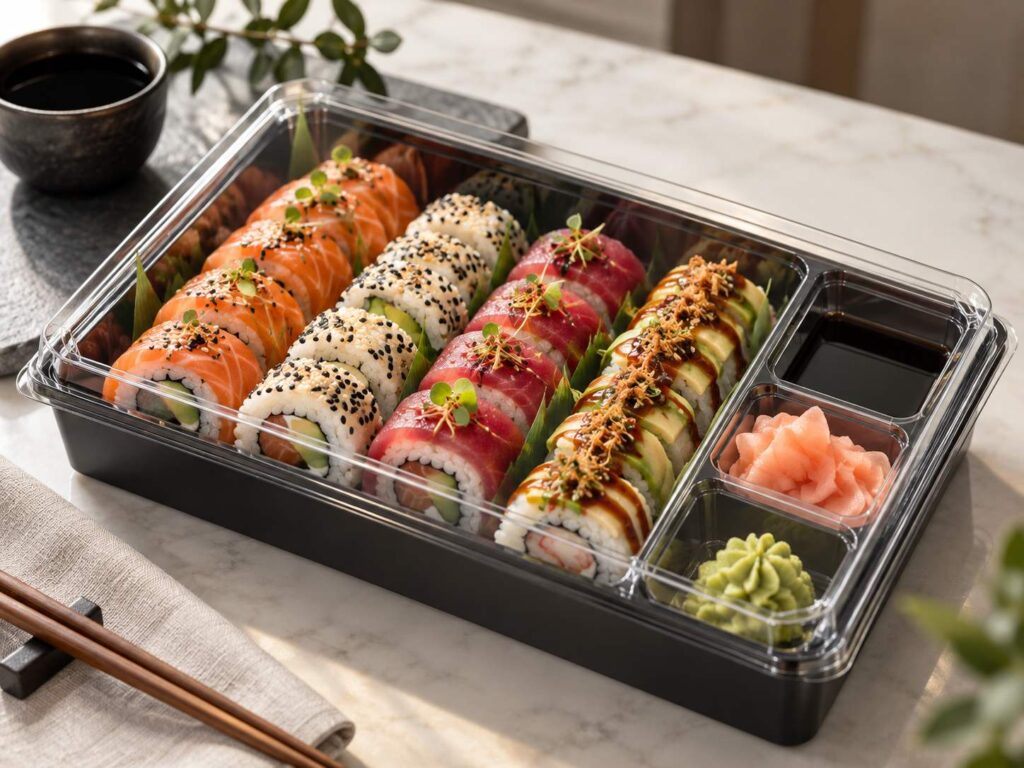
This principle works particularly well for sushi, desserts, appetizers, and sharing platters. Premium sushi packaging helps separate rolls, sauces, ginger, and additional items, preserve the arrangement, and create the impression of a complete restaurant-quality set.
For businesses, this creates an opportunity to introduce a higher-priced product tier without radically changing the recipe. Standard and expanded options appear on the menu, while the price difference is explained not only by the amount of food but also by presentation, included components, and convenience.
Strategy No. 2. Multi-Compartment Upselling: How Divided Containers and Trays Increase Combo Meal Sales
Combo meals are easier to sell when the packaging is designed from the beginning to accommodate several components. A compartmentalized container visually suggests the structure of an order: a main dish, side dish, appetizer, dessert, or additional ingredients.
For restaurants, this creates an opportunity to offer fixed meal combinations with a higher average order value than a single basic item. For example, instead of ordering one dish, customers are offered a “main course + side dish + sauce” or “appetizer + main course + dessert” combination. Each component has its own compartment and does not negatively affect the texture of neighboring foods.
This strategy is particularly useful for business lunches, Asian cuisine, fast food, and prepared meal delivery services. Packaging effectively becomes the framework of the offer, helping businesses sell not just an individual item but a complete meal experience.
Strategy No. 3. Build-Your-Own Meals: How Extra Sauces and Toppings Increase Profit Margins
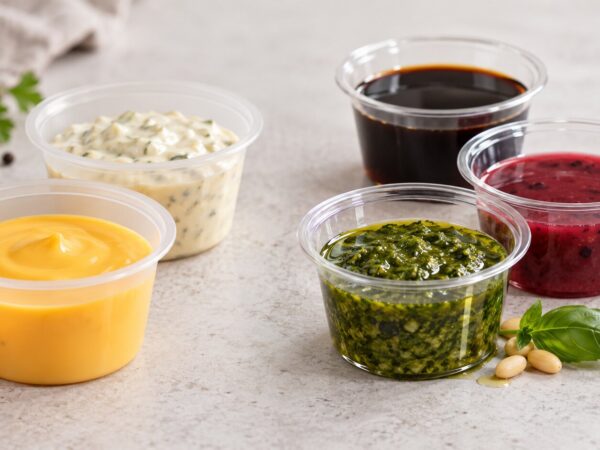
Additional ingredients make it possible to increase the average order value without significantly changing the main portion. Cheese sauce, jalapeños, crispy onions, nuts, or extra dressing may be relatively inexpensive for the kitchen but can be sold separately with a high markup.
Disposable sauce containers with lids are convenient for serving these additions. They help preserve the texture of the main dish, prevent ingredients from mixing during delivery, and allow customers to control how much sauce they use.
This strategy can be integrated directly into the product page: offer customers the option to add sauce, a double portion of cheese, two dips, or an extra topping. However, it is important to consider not only the ingredient cost but also the cost of individual packaging. For example, if the combined cost of the sauce and its container is UAH 5 and the selling price is UAH 25, the gross profit from the add-on will be UAH 20, excluding other expenses.
This approach helps restaurants generate additional profit from each order while allowing customers to customize combinations according to their preferences. The main requirement is that add-ons genuinely improve the dish and that their prices are clear before checkout.
Strategy No. 4. Managing Size Perception (The Size Decoy Effect) in Coffee Shops and Fast Food Restaurants
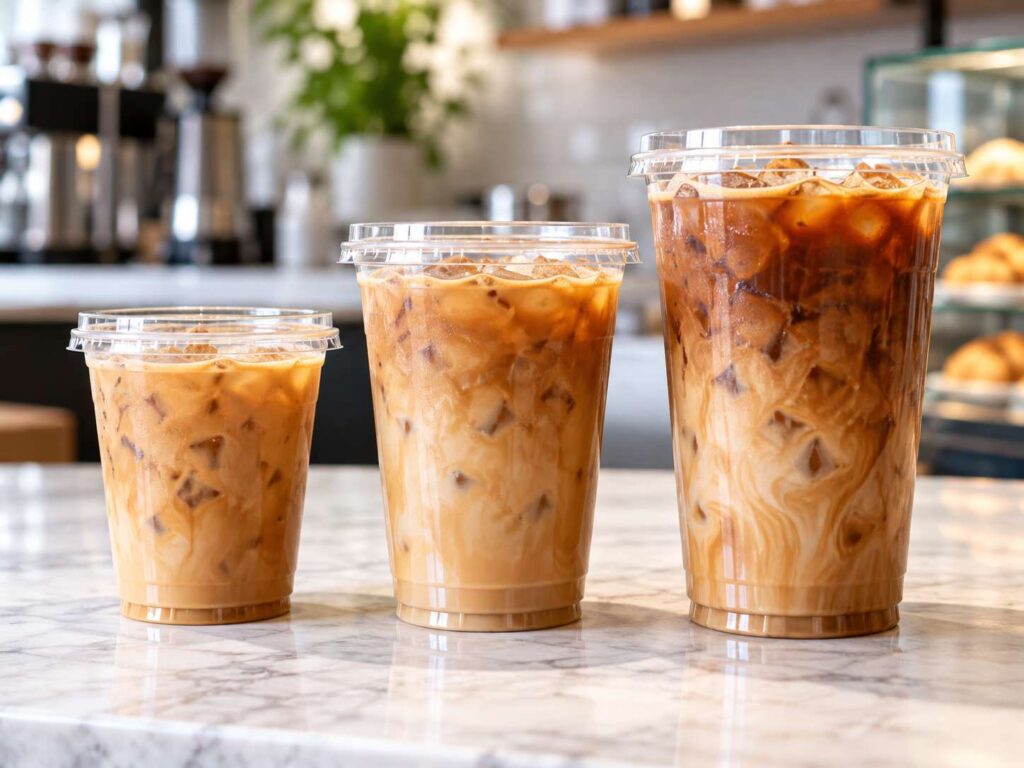
An S, M, and L size range does more than offer different volumes. It creates reference points for comparison. If the price difference between a medium and a large drink seems small relative to the increase in volume, some customers will choose the larger option.
In this model, XL plastic cups become more than just containers. They become part of the menu structure. The large format must be included in the assortment of cups, lids, and other consumables in advance so it can be offered consistently without confusion during order preparation and pickup.
For hot beverages, it is also important to choose compatible paper cup lids to ensure secure packaging and convenient takeaway service.
For coffee shops, bubble tea businesses, lemonade stands, and cold coffee menus, a visible difference between drink sizes is particularly important. However, the “decoy” should not mislead customers: prices and volumes must be clearly displayed, and the upselling strategy should be based on the understandable value of a larger portion.
Strategy No. 5. Protecting Food Quality as a Guarantee of Retention Rate (Customer Retention)
Average order value is important, but the likelihood of receiving another order is equally significant. If an order arrives in poor condition, the customer does not evaluate the courier, container, and kitchen separately. Instead, they judge the entire experience.
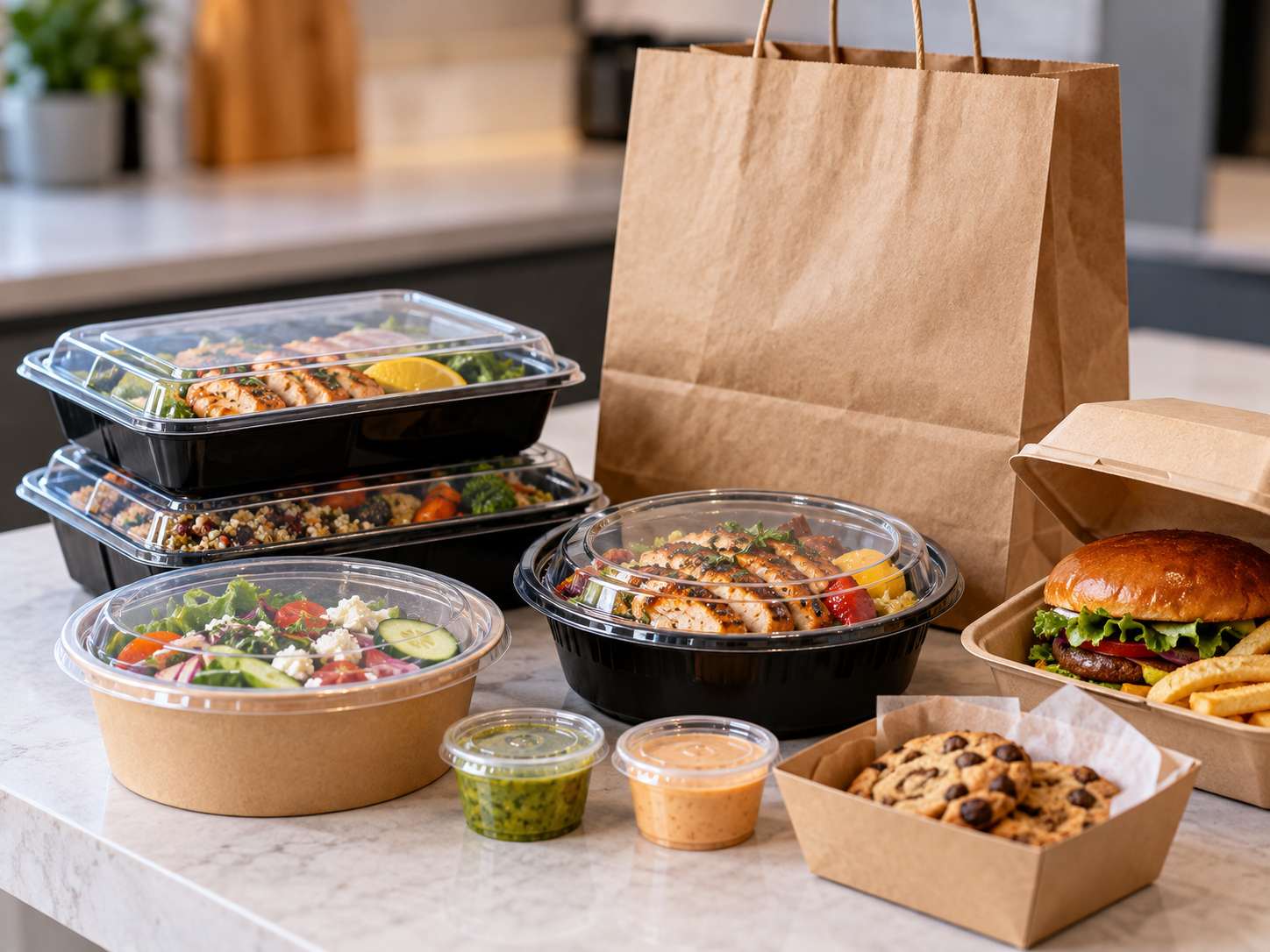
Leak-proof food delivery packaging reduces the risk of leaks, ingredients mixing, and dishes losing their attractive appearance. For hot and cold food, it is also important to select containers based on temperature, transportation time, and the amount of moisture inside.
The connection to Retention Rate is direct: the more consistently customers receive their orders as intended by the kitchen, the fewer reasons they have to switch restaurants after a disappointing experience. This makes packaging quality particularly important for dishes with sauces, soups, salads, sushi rolls, desserts, and long-distance deliveries.
Saving a few hryvnias on packaging may prove unprofitable if it causes the restaurant to lose a repeat order with much greater potential revenue.
HoReCa Procurement: How to Calculate the Return on Investment in Higher-Quality Packaging
Calculating the return on investment in packaging should begin not with the price difference between containers but with order performance indicators. Businesses need to compare the cost of their current and new packaging, average order value, number of orders, refund and compensation rates, add-on sales, and repeat purchases.
A simplified calculation involves comparing additional monthly packaging expenses with the additional gross profit generated by new combo meals, sauces, larger drinks, and premium presentation options, as well as the reduction in losses from damaged orders.
For example, consider a hypothetical calculation for a restaurant that upgraded its packaging and introduced new menu items.
| Monthly Performance Indicator | Amount |
| Additional profit from combo meals, sauces, and drinks before accounting for new packaging costs | +UAH 12,000 |
| Reduction in compensation for damaged orders | +UAH 2,000 |
| Additional packaging expenses | −UAH 5,000 |
| Total economic benefit | +UAH 9,000 |
In this example, the new packaging generates an additional economic benefit of UAH 9,000 per month for the restaurant. This calculation is hypothetical: actual results depend on sales, the cost of add-ons, and implementation expenses.
Before scaling up, it is better to conduct a test within one menu category or at a single location. As a plastic packaging manufacturer, Optipak offers cups, lids, sauce containers, food containers, and other solutions for HoReCa businesses, tailored to specific products and delivery formats.
High-quality packaging does not have to be the most expensive option. Its purpose is to perform a commercial function: protect the food, support brand positioning, create opportunities for upselling, and help customers enjoy an experience they are willing to pay for again.
-
 Sauce Cups and Mini Containers (10–50 ml): Closure Options, Materials, and Leak Resistance During TransportationMore details
In food delivery, every packaging detail matters. Food containers will not save an order if...
-
How Packaging Affects Ratings on Glovo and Bolt Food: A Guide for Restaurants and Coffee ShopsMore details
Delivery customers evaluate not only the taste but also the condition of the order when...
-
Dome-Lid Cups for Summer Drinks: How to Choose the Ideal Packaging for a Coffee Shop or Fast-Food BusinessMore details
The summer season is the peak period for selling refreshing cocktails, iced coffee, smoothies, and...
-
How to Start a Home Bakery and Sell Desserts Through InstagramMore details
Turning a passion for baking into a stable source of income is a dream for...
-
How to Start a Sushi Delivery Business from Scratch: A Step-by-Step Guide for EntrepreneursMore details
The fast-food industry continues to demonstrate steady growth, while Japanese cuisine firmly maintains its leadership...