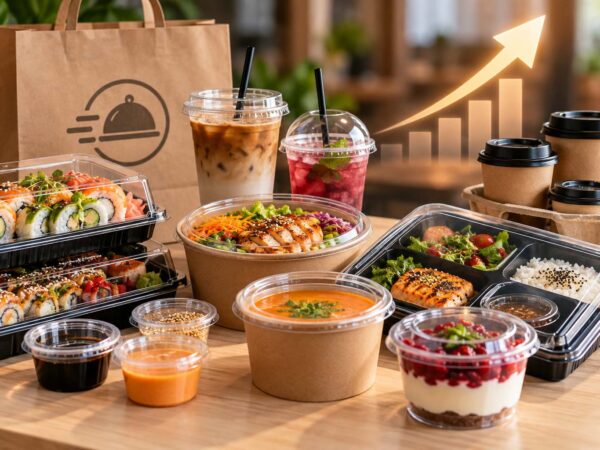
Disposable food containers are an affordable and essential product widely used in the food industry, catering, and retail. Beyond commercial use, they are incredibly practical for household organization, keeping cupboards and refrigerators tidy without accumulating dirty dishes. Their lightweight and shatterproof nature makes them indispensable for outdoor activities and picnics.
These containers keep meals fresh and appetizing, making them ideal for both storage and transportation. By maintaining the product’s visual appeal, they directly influence consumer choice—customers are far more likely to purchase items that look fresh and well-presented. For the catering sector, using high-quality containers is a key driver for increasing profit, as it enables seamless takeaway and delivery services.
Types of Food Containers
The vast variety of food boxes ensures there is a perfect solution for every scenario:
- Shapes: Available in round, square, rectangular, oval, and more to fit specific products perfectly.
- Sizes: A wide range of dimensions allows for precise portion control, whether for individual servings or bulk batches.
- Materials: Manufactured from Polystyrene (PS), Polypropylene (PP), and PET. All these materials are certified safe for human contact.
- Applications: Specifically designed for fruits and berries, cakes and pastries, ready-to-eat meals, and semi-finished products.
At Optipak, you can purchase wholesale containers specifically engineered for berries, fruits, vegetables, and herbs. These containers are designed to maximize shelf life while maintaining a premium, “market-fresh” appearance.
10 Key Advantages of Disposable Containers
- Temperature Resistance: They handle both high and low temperatures, making them suitable for everything from frozen goods to hot deliveries.
- Durability: They are impact-resistant, ensuring that both the packaging and the food inside remain intact during transit.
- Microwave-Safe: Customers can reheat meals directly in the container, saving time and eliminating the need for extra dishes.
- Barrier Protection: They block moisture and external odors, preserving the original flavor and freshness of the food.
- Branding Opportunities: Custom logos can be applied to the packaging, turning every delivery into a marketing tool to increase brand awareness.
- High Clarity: Transparent walls allow customers to inspect the product from all angles, which significantly boosts buyer confidence.
- Freshness Guarantee: Both sellers and buyers can be confident that the food remains as appetizing as the moment it was packed.
- Versatility: While designed for food, they are also excellent for storing various non-food industrial items.
- Chemical Resistance: Made from high-quality materials that do not react with food acids or chemicals, ensuring long-term safety.
- Cost-Effectiveness: Despite their many benefits, these containers remain a low-cost packaging solution.
Applications: From Kitchens to Industrial Use
The versatility of plastic containers is their greatest strength. You can find them in home kitchens, supermarkets, bakeries, and high-end restaurants. They are perfect for “buy-and-eat” scenarios, long-term freezing, and professional food logistics.
For business owners, high-quality containers provide a competitive edge. Supermarkets can enhance their merchandising, while restaurants can expand their reach through delivery and takeaway models.
Optipak offers wholesale food-grade plastic containers in various types and large quantities. Contact us today to discuss your requirements and find the perfect packaging solution for your business.
-
 Packaging as a Driver of Average Order Value: 5 High-Margin Strategies for Food Delivery Services and Coffee ShopsMore details
Packaging affects more than just the condition of an order. It determines portion formats, helps...
-
Sauce Cups and Mini Containers (10–50 ml): Closure Options, Materials, and Leak Resistance During TransportationMore details
In food delivery, every packaging detail matters. Food containers will not save an order if...
-
How Packaging Affects Ratings on Glovo and Bolt Food: A Guide for Restaurants and Coffee ShopsMore details
Delivery customers evaluate not only the taste but also the condition of the order when...
-
Dome-Lid Cups for Summer Drinks: How to Choose the Ideal Packaging for a Coffee Shop or Fast-Food BusinessMore details
The summer season is the peak period for selling refreshing cocktails, iced coffee, smoothies, and...
-
How a Coffee Shop Can Reduce Packaging Costs: Purchasing Directly from the ManufacturerMore details
Every coffee business owner knows that the profitability of an establishment depends on many small...